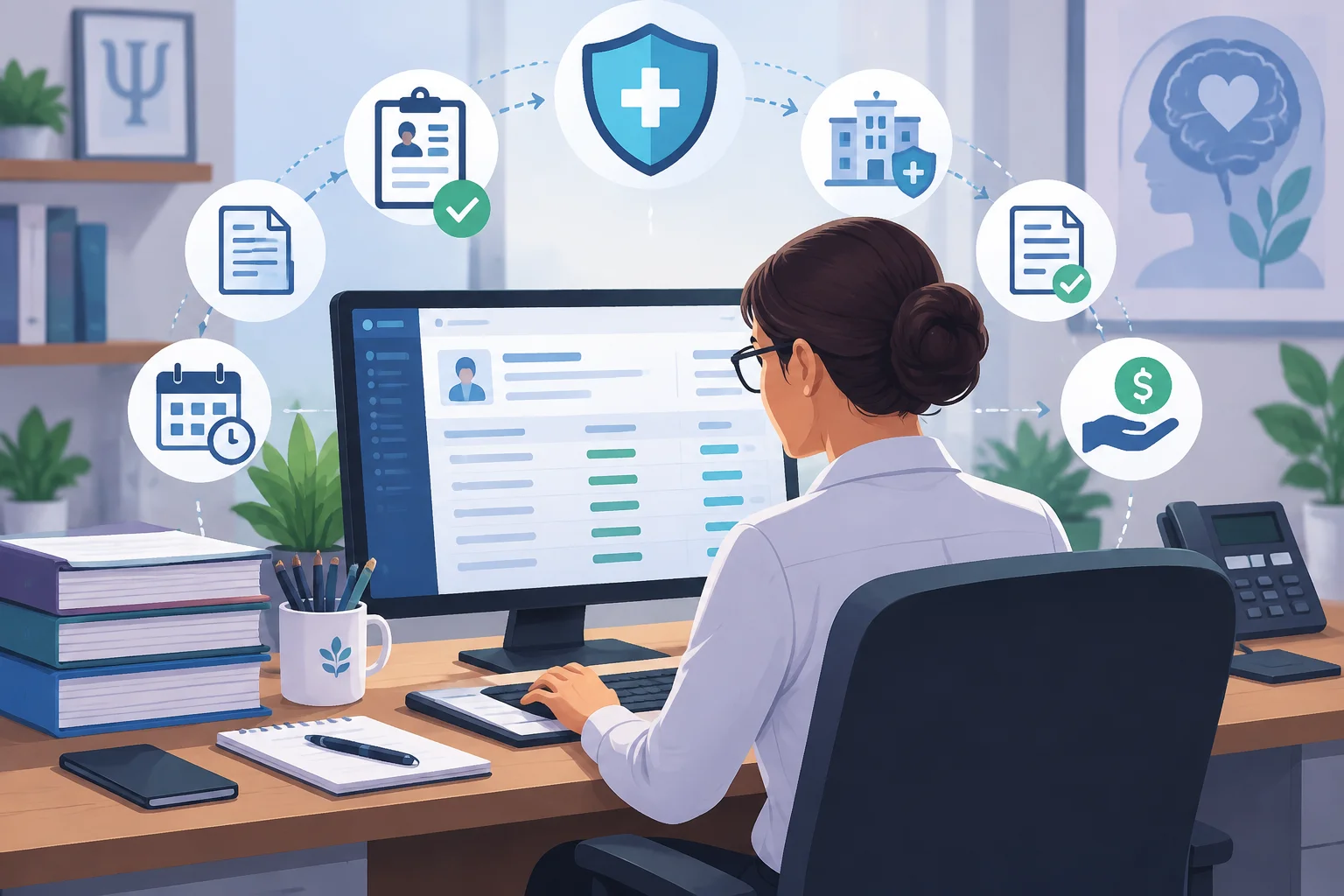
Mental health billing is more complex than many counseling centers realize. From insurance verification and prior authorizations to DSM-5 coding and claim submission, even small billing errors can lead to denied claims, delayed reimbursements, and lost revenue. As practices grow, managing these tasks in-house can become time-consuming and difficult to scale.
That’s why many counseling centers rely on specialized mental health billing solutions to streamline billing workflows, improve claim accuracy, and maintain a steady cash flow. Whether you are looking to outsource billing, strengthen your revenue cycle management process, or use software that automates claims and payments, the right solution can reduce administrative burdens and support long-term practice growth.
What Is a Mental Health Billing Solution?
A mental health billing solution is a specialized service or software that helps counseling centers manage insurance claims, patient billing, reimbursements, and payment tracking. It streamlines billing workflows and helps practices get paid faster while reducing administrative work.
Unlike general medical billing, mental health billing involves therapy-specific CPT codes, telehealth services, and payer-specific requirements. The right solution helps reduce claim denials, improve billing accuracy, and support a healthier cash flow.
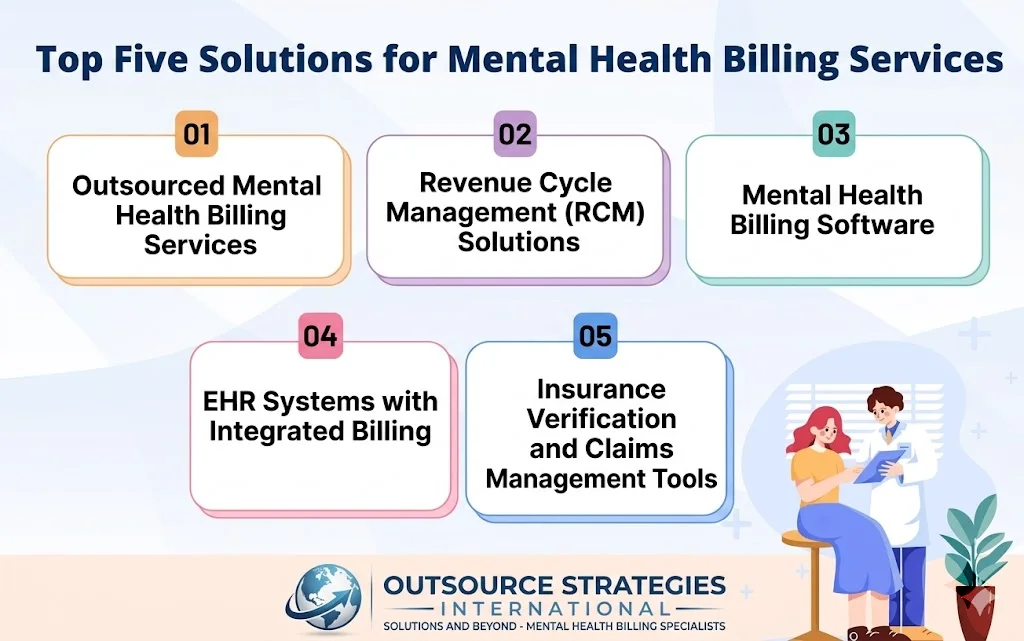
Top 5 Mental Health Billing Solutions for counseling centers
Choosing the right billing solution depends on your practice size, budget, and workflow needs. Some counseling centers prefer outsourced billing services, while others use software or integrated EHR platforms to manage billing in-house.
1. Outsourced Mental Health Billing Services
Outsourced mental health billing services enable counseling centers to delegate billing tasks to experienced third-party professionals. These services typically manage insurance verification, medical coding, claims submission, payment posting, and denial follow-ups on behalf of the practice.
By outsourcing billing, therapists and administrative staff can spend less time on paperwork and more time supporting clients. This solution is often a good fit for counseling centers that want to reduce claim denials, improve reimbursement rates, and streamline their revenue cycle without managing billing in-house.
2. Revenue Cycle Management (RCM) Solutions
Revenue Cycle Management (RCM) solutions help counseling centers oversee the entire billing lifecycle, from insurance verification and claims submission to payment tracking and denial management. Instead of focusing on a single billing task, RCM takes a broader approach to improving financial performance and reducing revenue loss.
For counseling centers, RCM solutions can help identify billing bottlenecks, improve reimbursement rates, and ensure claims move efficiently through the payment process. They are particularly valuable for growing practices that handle a higher volume of patients and need a more structured approach to managing revenue.
3. Mental Health Billing Software
Mental health billing software helps counseling centers manage insurance claims, patient billing, payment tracking, and other financial tasks from a single platform. Many solutions also integrate scheduling, documentation, and reporting features, helping practices keep clinical and billing workflows organized. While software provides greater control over in-house billing, some practices prefer Mental Health Billing Services to handle these responsibilities externally.
By automating routine billing processes, mental health billing software can reduce manual errors, improve claim accuracy, and speed up reimbursements. This solution is ideal for counseling centers that want to manage billing in-house while maintaining greater visibility and control over their financial operations.
4. EHR Systems with Integrated Billing
EHR systems with integrated billing automatically generate insurance claims directly from clinical documentation, reducing duplicate data entry and improving reimbursement speed. By linking patient records, scheduling, and billing workflows, these systems help counseling centers maintain accurate and efficient revenue cycle operations.
These platforms also improve claim accuracy by streamlining insurance eligibility checks and reducing manual errors during data entry. They are a strong fit for counseling centers that want an all-in-one system to manage both patient care and billing within a single, connected workflow.
5. Insurance Verification and Claims Management Tools
Insurance verification and claims management tools help counseling centers confirm patient eligibility, handle pre-authorizations, and manage insurance claims more efficiently. These systems reduce manual data entry and lower the risk of claim denials by identifying coverage issues and payer requirements before services are billed.
By offering real-time eligibility checks and automated claim tracking, these tools improve billing accuracy and speed up reimbursements. They are especially useful for counseling centers that want to strengthen their revenue cycle by minimizing errors and ensuring smoother communication with insurance payers.
How to Choose the Right Mental Health Billing Solution
Choosing the right mental health billing solution becomes easier when you evaluate it using clear, practical factors. The goal is to improve billing accuracy, reduce claim denials, and ensure smooth revenue cycle management for your counseling center.
Key factors to consider:
- Behavioral health specialization: Make sure the solution supports therapy-specific CPT codes, modifiers, and mental health authorization workflows.
- EHR integration: Choose a system that connects easily with your existing EHR or practice management software to avoid double data entry.
- Denial management: Look for tools that track rejected claims, provide A/R reports, and simplify appeals.
- Insurance verification: Real-time eligibility and benefits checks (VOBs) help prevent billing issues before sessions.
- Compliance & security: Ensure the platform is HIPAA-compliant with strong data protection for sensitive patient records.
- Scalability: Pick a solution that can grow with your practice, whether you add providers or expand locations.
Before finalizing, it’s also a good idea to test a demo or trial version to see how the workflow fits your team’s daily operations.
Benefits of Using Specialized Mental Health Billing Solutions
Benefits of Using Specialized Mental Health Billing Solutions
Specialized mental health billing solutions are designed to reduce administrative burden and improve revenue performance for counseling centers. By automating complex behavioral health billing tasks such as time-based CPT coding (e.g., 90832–90837), claim submission, and payer compliance they help practices avoid common billing errors and reduce financial leakage.
Key benefits include:
- Accurate behavioral health coding: Ensures correct use of time-based CPT codes, telehealth modifiers, and diagnosis alignment to reduce undercoding or overcoding errors.
- Fewer claim denials: Built-in payer rule checks and eligibility validation help prevent rejected claims and improve first-pass acceptance rates.
- Reduced administrative workload: Automates billing, claims follow-ups, and payment tracking so clinicians can focus more on patient care.
- Better patient collections: Clear billing statements and payment options improve transparency and increase on-time payments.
- Stronger compliance & security: Maintains HIPAA compliance and protects sensitive mental health data with secure workflows and audit readiness.
- Improved EHR integration: Connects with clinical records so documentation, treatment notes, and billing stay aligned in one system.
Conclusion
Mental health billing is complex, but the right solution whether outsourced services, RCM, software, EHR systems, or verification tools can reduce claim denials, improve reimbursements, and simplify operations. The best choice depends on your practice size and needs, but the goal is always the same: better cash flow and less administrative burden so you can focus on patient care.
FAQs
What is mental health billing?
Mental health billing is the process of submitting insurance claims, applying correct CPT codes for therapy/psychiatric services, and collecting payments from insurers or patients.
Should counseling centers outsource billing?
Yes, if they lack a dedicated billing team or face frequent claim denials. Outsourcing helps reduce errors, save time, and improve reimbursement speed.
Should counseling centers outsource billing?
Billing software is a tool your team uses in-house to manage claims and payments. Billing services are third-party providers who handle the entire billing process for you.
What is the difference between billing software and billing services?
Billing software is a tool your team uses in-house to manage claims and payments. Billing services are third-party providers who handle the entire billing process for you.
How can counseling centers reduce claim denials?
Use correct CPT coding, verify insurance before sessions, submit clean claims on time, and track rejections quickly for correction and resubmission.