Prior authorization is one of the biggest barriers in mental health care today delaying treatment, increasing denials and draining staff productivity before a single session ever takes place. For mental health providers across the United States, the decision to outsource prior authorization is no longer just a convenience. It is becoming a financial necessity.
According to a 2024 AMA survey, practices handle an average of 39 mental health prior authorization services per week, consuming nearly 13 hours of administrative work every single week. That is more than a day and a half of staff time spent on paperwork instead of patients.
This guide explains why prior authorization is so complex in mental health, what it is actually costing your practice and how outsourcing can help you get approvals faster, reduce denials, and refocus your team on the work that matters most.
Why Prior Authorization Is So Time-Consuming in Mental Health
Mental health prior authorization is not like prior auth in other specialties. The complexity runs deeper and the administrative burden is significantly heavier.
Behavioral Health Carve-Outs Add a Separate Layer
Payers like Optum and Carelon manage their mental health benefits completely separately from their medical benefits. That means different portals, different criteria, different documentation requirements and different timelines all for the same patient who might have coverage under a single insurance card. Most in-house billing teams are not set up to navigate this efficiently.
Frequent Re-Authorizations Create a Never-Ending Cycle
For intensive services like Intensive Outpatient Programs or Partial Hospitalization Programs, authorizations may only cover 7 to 14 days of treatment at a time. That means your team is not just getting one approval per patient, they are chasing renewals on a near-constant basis while simultaneously managing new requests.
Subjective Clinical Criteria Make Documentation Harder
Unlike a lab value or an imaging result, mental health medical necessity cannot be proven with a number on a page. It requires clinical narratives, functional impairment assessments and risk evaluations written in a way that meets each payer’s specific criteria. Getting this documentation right the first time is a skill and it is one that most front desk staff and general billers simply do not have.
The Hidden Cost of In-House Prior Authorization Management
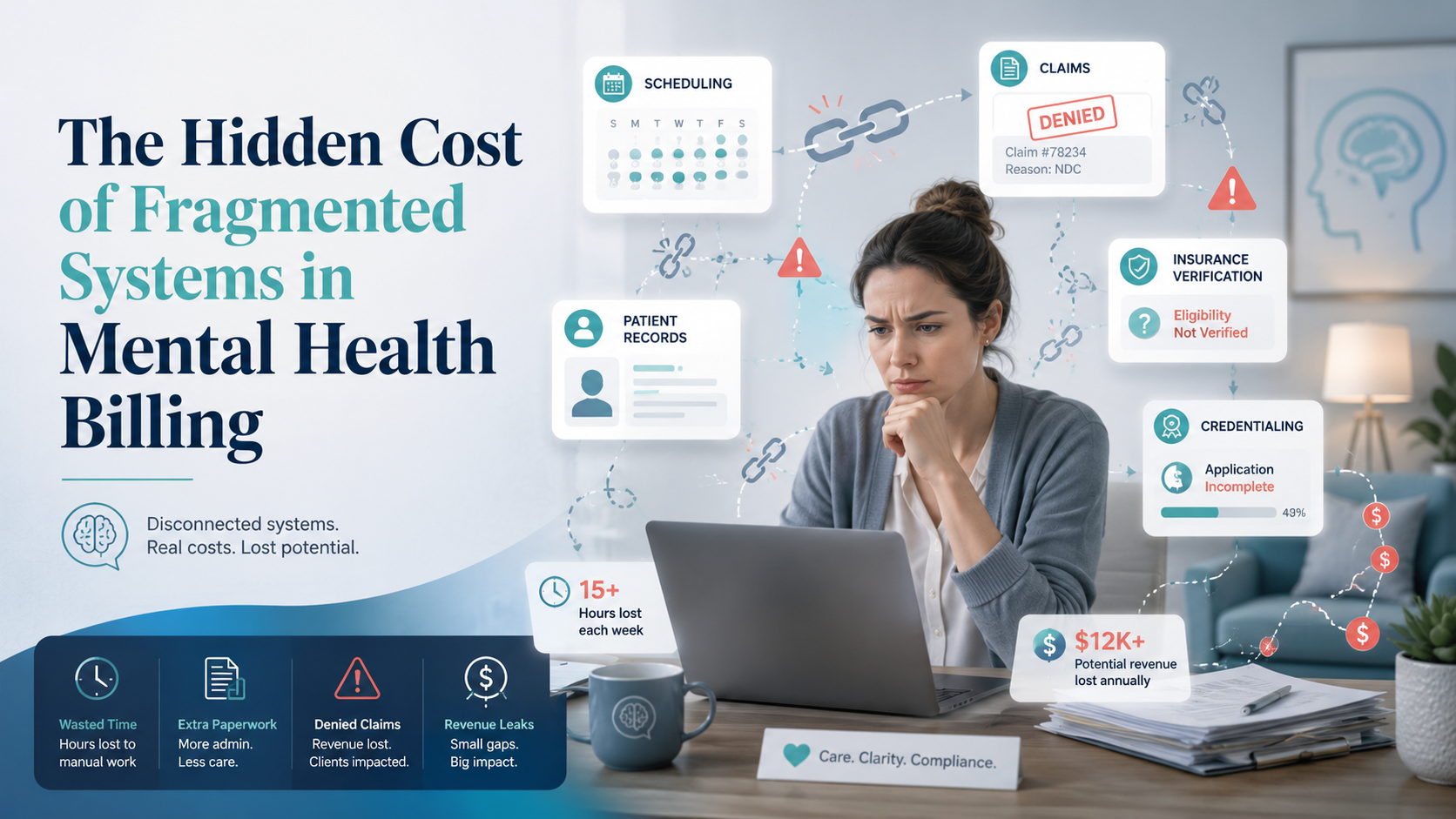
The real cost of managing prior authorizations in-house is rarely visible on a spreadsheet but it shows up everywhere else.
Staff spend hours every week on eligibility checks, documentation gathering, form completion, payer portal navigation and follow-up calls. Every hour spent on prior auth is an hour not spent on patient intake, scheduling, billing, or any of the other tasks that keep the practice running.
Delays in authorization lead directly to patient drop-off. When a patient who is ready to start therapy has to wait two to three weeks for approval, many of them do not wait; they disengage, reschedule, or never come back. In a specialty where early engagement is critical to treatment outcomes, authorization delays are not just an administrative problem. They are a clinical one.
And when authorizations are denied, the situation gets even more resource-intensive. Peer-to-peer reviews, clinical appeals and documentation resubmissions all pull providers and administrators away from their core responsibilities, often for claims that could have been approved on the first submission with the right documentation.
How Prior Authorization Delays Impact Cash Flow
The financial impact of a broken prior authorization process is direct and measurable.
When a claim goes out without valid authorization, it gets denied. That much is obvious. What is less obvious is what happens next or more accurately, what does not happen. Research consistently shows that 30% of denied claims are never appealed, representing pure revenue that the practice earned but never collected. In mental health, where margins are already tight and payer reimbursements are often lower than other specialties, that level of write-off is not sustainable.
Staff burnout adds another layer to the cost. A 2024 AMA study found that 93% of physicians reported care delays directly caused by prior authorization requirements. When your clinical and administrative team is spending significant time on authorization management, the downstream effects of turnover, reduced capacity, decreased morale are real and expensive.
The Regulatory Context in 2026
The prior authorization landscape is shifting in 2026 in both directions.
Major insurers have pledged to simplify procedures and reduce the number of services requiring preauthorization, which is a positive development. But CMS is simultaneously expanding its use of AI-powered audits to identify documentation gaps and billing irregularities with far greater precision than before. That means practices that submit authorization requests with incomplete or non-compliant documentation are facing greater scrutiny than ever making accuracy in the prior auth process more critical, not less.
What Prior Authorization Outsourcing Really Means
There is a common misconception that outsourcing prior authorization simply means handing off a task to someone else. That is not what effective prior authorization outsourcing service actually looks like.
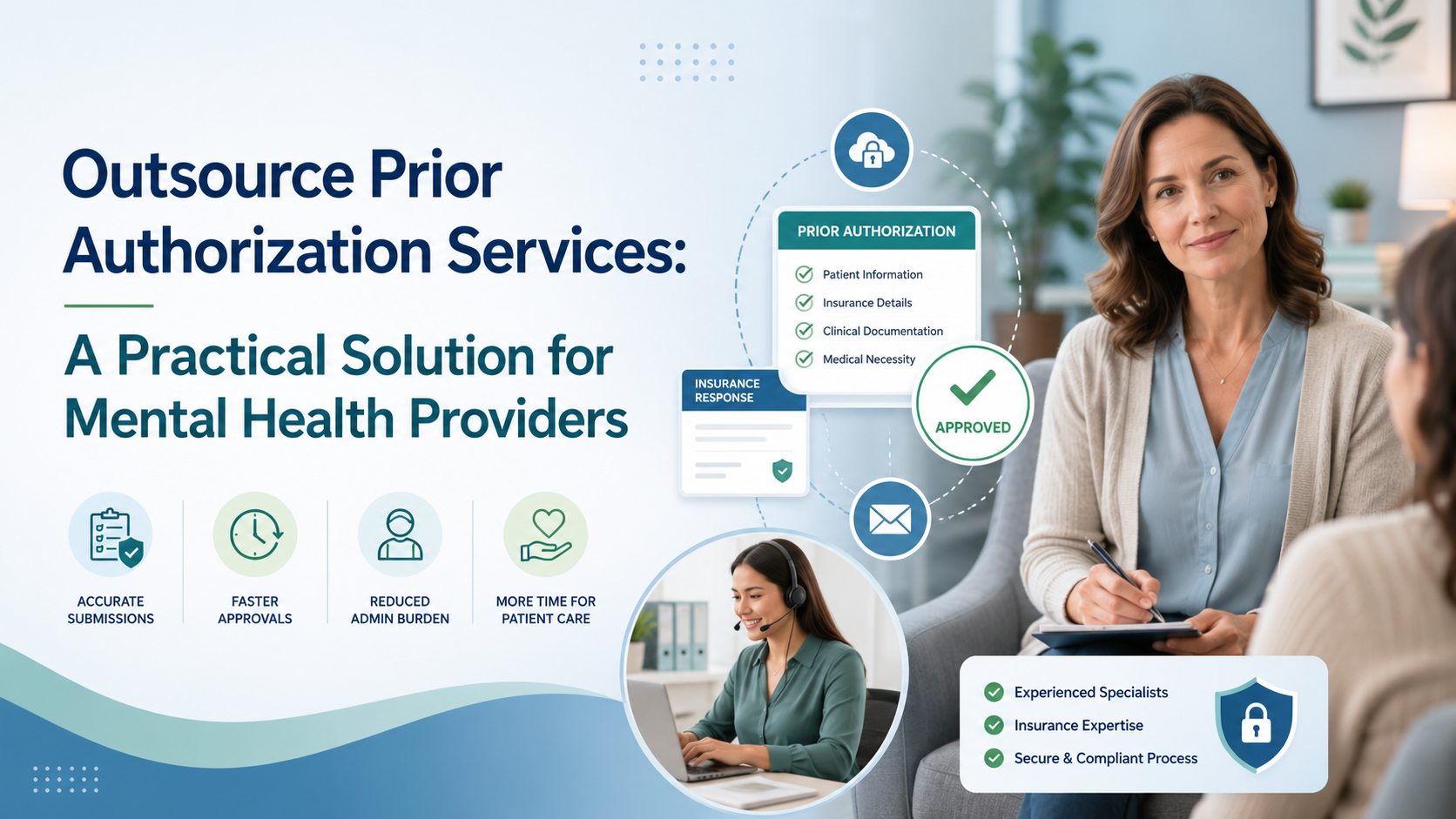
True outsourcing means partnering with a specialized team that manages the entire authorization process from eligibility verification and documentation review to payer submission, follow-up, escalation handling and appeals. The distinction matters because effective outsourcing is not task delegation. It is process optimization. A specialized partner brings payer-specific knowledge, standardized documentation practices and dedicated follow-up workflows that most in-house teams simply cannot replicate.
How Outsourcing Reduces Peer-to-Peer Reviews
One of the most underappreciated benefits of prior authorization outsourcing solutions is the reduction in peer-to-peer reviews.
Most peer-to-peer reviews are not triggered because a payer clinically disagrees with a treatment decision. They are triggered because the submitted documentation was incomplete, inconsistently formatted, or failed to address the payer’s specific medical necessity criteria. A specialized outsourcing partner that understands payer requirements at a granular level submits documentation that is aligned with those criteria from the start reducing peer-to-peer review triggers by 30 to 40% in many cases.
That means less time pulled from your clinicians for phone reviews, fewer delays in patient care, and a higher first-pass approval rate across the board.
Key Selection Criteria for an Outsourcing Partner
Not all preauthorization outsourcing companies are the same. Here is what to look for when evaluating a partner:
- Behavioral Health Expertise: General RCM experience is not enough. Look for a partner with proven, specific experience in mental health billing solutions and prior authorization including behavioral health carve-outs and payer-specific mental health criteria.
- Payer Intelligence Matrix: The best partners maintain a centralized, up-to-date database of payer requirements, portal procedures and documentation standards so nothing gets missed.
- Documentation Standardization: Your partner should actively help you build documentation templates and workflows that meet payer-specific criteria, not just submit what you give them.
- First-Pass Approval Rate: Ask directly. A strong preauthorization services outsourcing partner should be achieving a first-pass approval rate of 95% or higher.
- EHR Integration: They should be able to work within your existing electronic health record system without requiring a platform change or disruptive workflow overhaul.
- Transparent Reporting: Regular reporting on approval rates, turnaround times, denial trends and appeal outcomes gives you full visibility into the process and the results.
FAQ
What is prior authorization outsourcing?
Prior authorization outsourcing means partnering with a specialized team to manage the entire prior authorization process on behalf of your practice including verification, submission, follow-up and appeals. So your staff can focus on patient care instead of payer portals.
How much does outsourcing prior authorization cost?
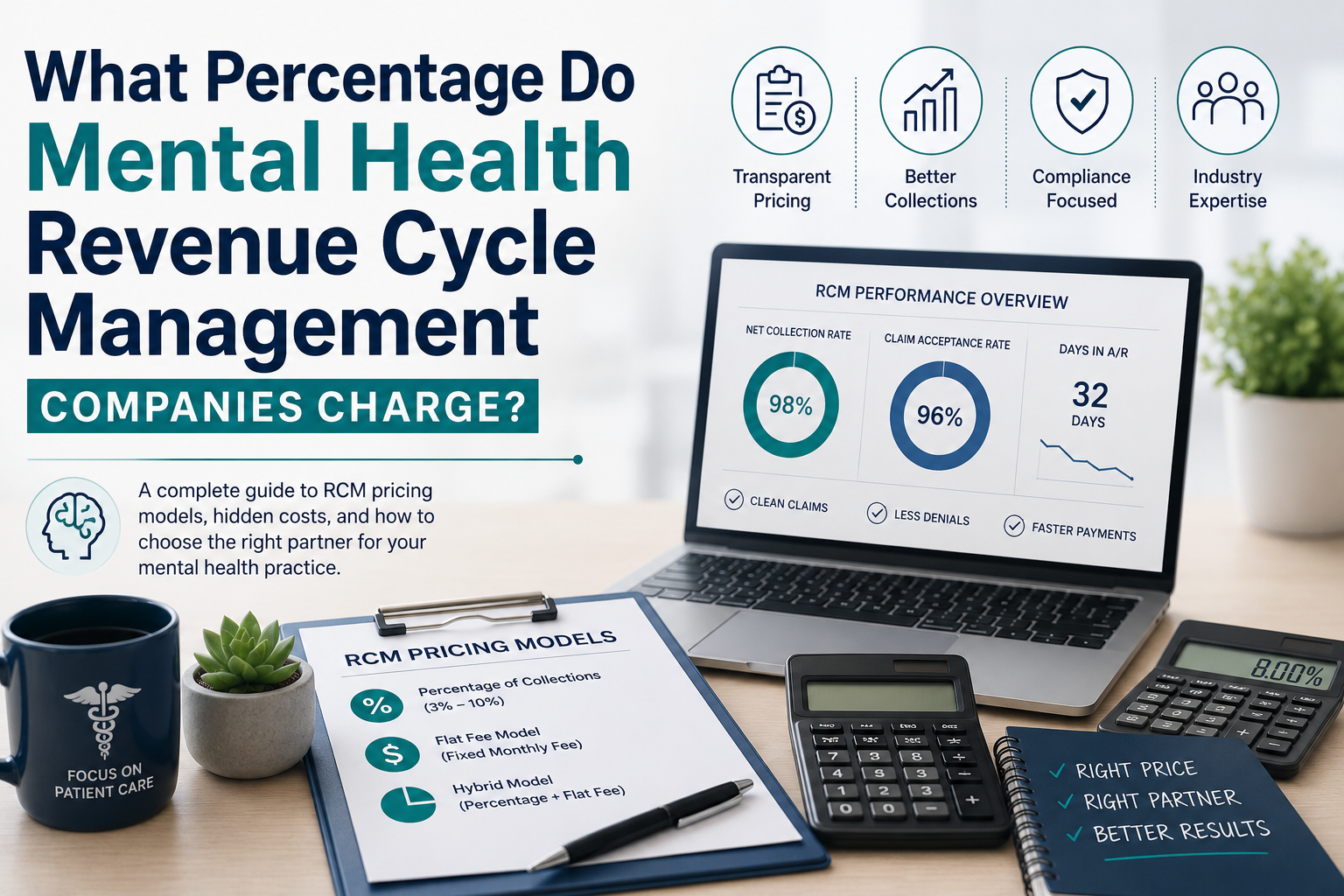
Most services charge either a percentage of collections or a flat fee per authorization. The right partner will offer a free audit to assess your current process and provide a custom quote based on your volume and service mix.
How long does it take to outsource prior authorization?
Onboarding typically takes 2 to 4 weeks. Most practices begin seeing measurable results faster approvals, fewer denials, reduced staff hours within 30 to 60 days of going live.
Can I outsource only certain services?
Yes. Many practices choose to outsource prior authorization for high-complexity services like IOP or residential treatment while continuing to manage simpler authorizations in-house. A good partner will build a model that fits your specific needs.
How do I know if outsourcing is right for my practice?
If your team is spending 10 or more hours per week on prior authorizations, your denial rate is above 10%, or your staff is showing signs of administrative burnout, outsourcing is almost certainly the right solution. The cost of doing nothing is higher than the cost of getting help.
Stop Letting Prior Authorization Run Your Practice
Prior authorization is a critical step in the mental health revenue cycle but when it is managed in-house without the right systems, expertise and bandwidth, it becomes a bottleneck that slows down care, drains revenue and burns out your team.
Outsourcing to a specialized partner changes the equation. Approvals come faster. Denials drop. Staff hours are redirected to higher value work. And your practice gets the financial stability it needs to keep growing and serving the patients who depend on you.
Learn more about our Mental Health Prior Authorization Services and find out how we can help your practice get approvals faster, recover more revenue, and eliminate the administrative burden that is holding you back.